



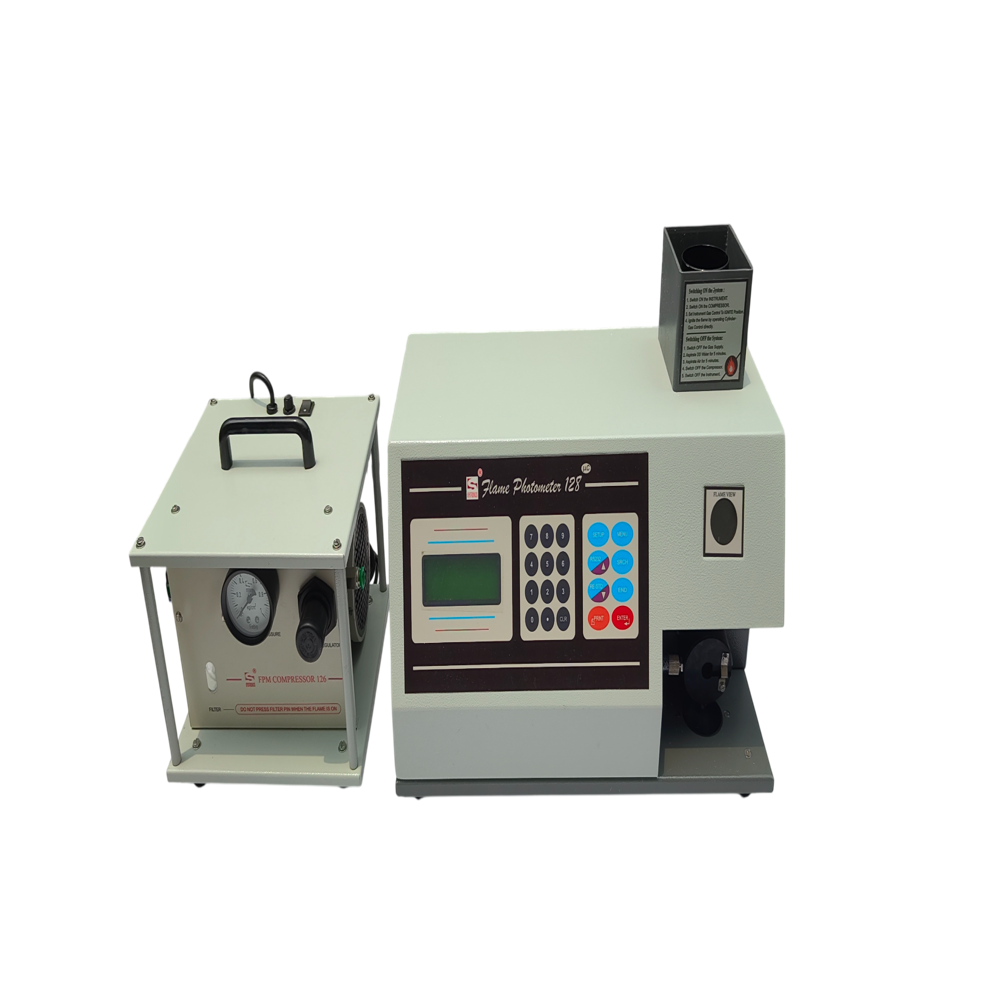
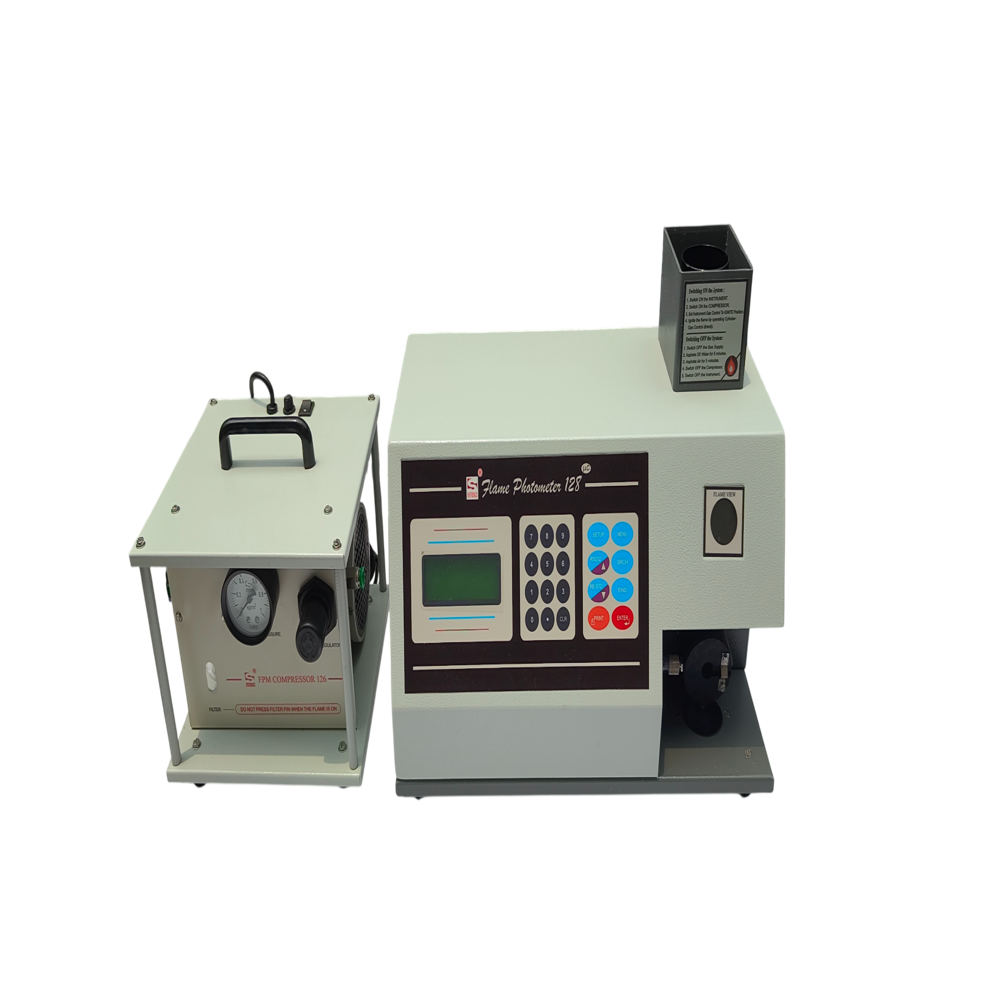
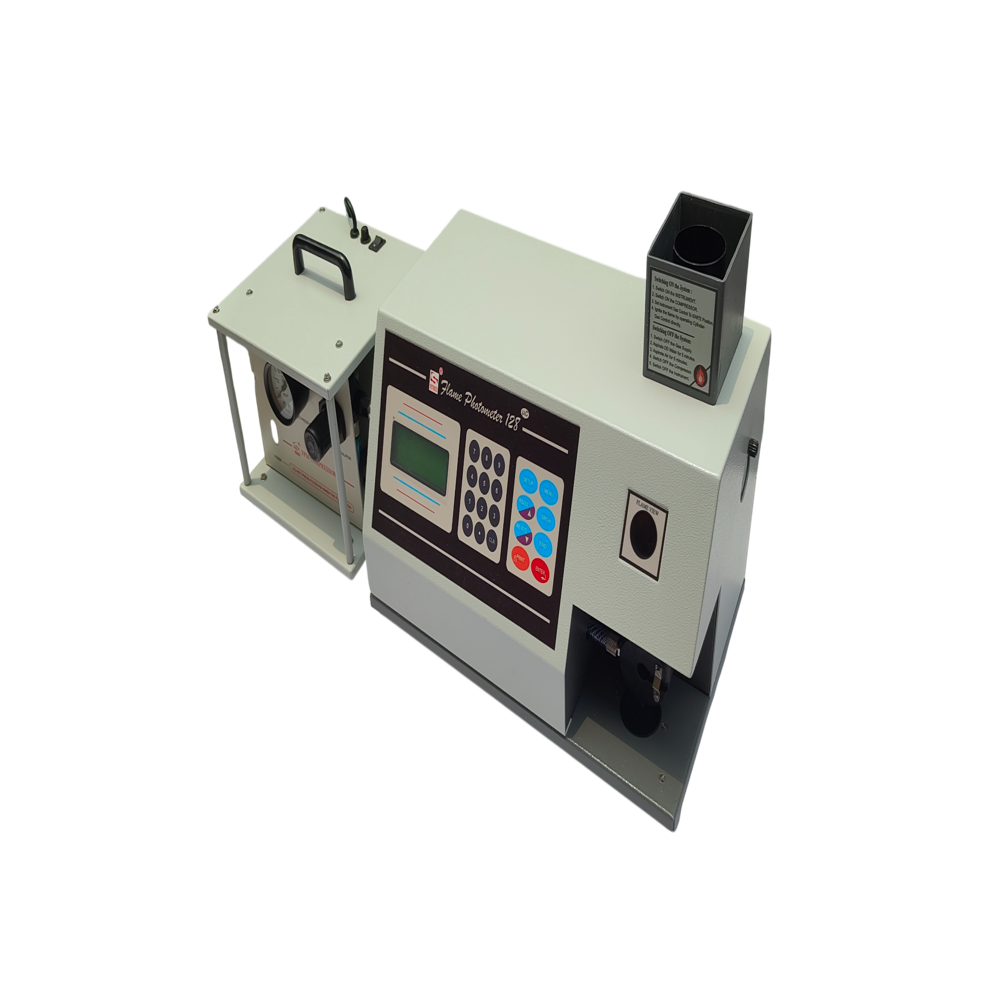
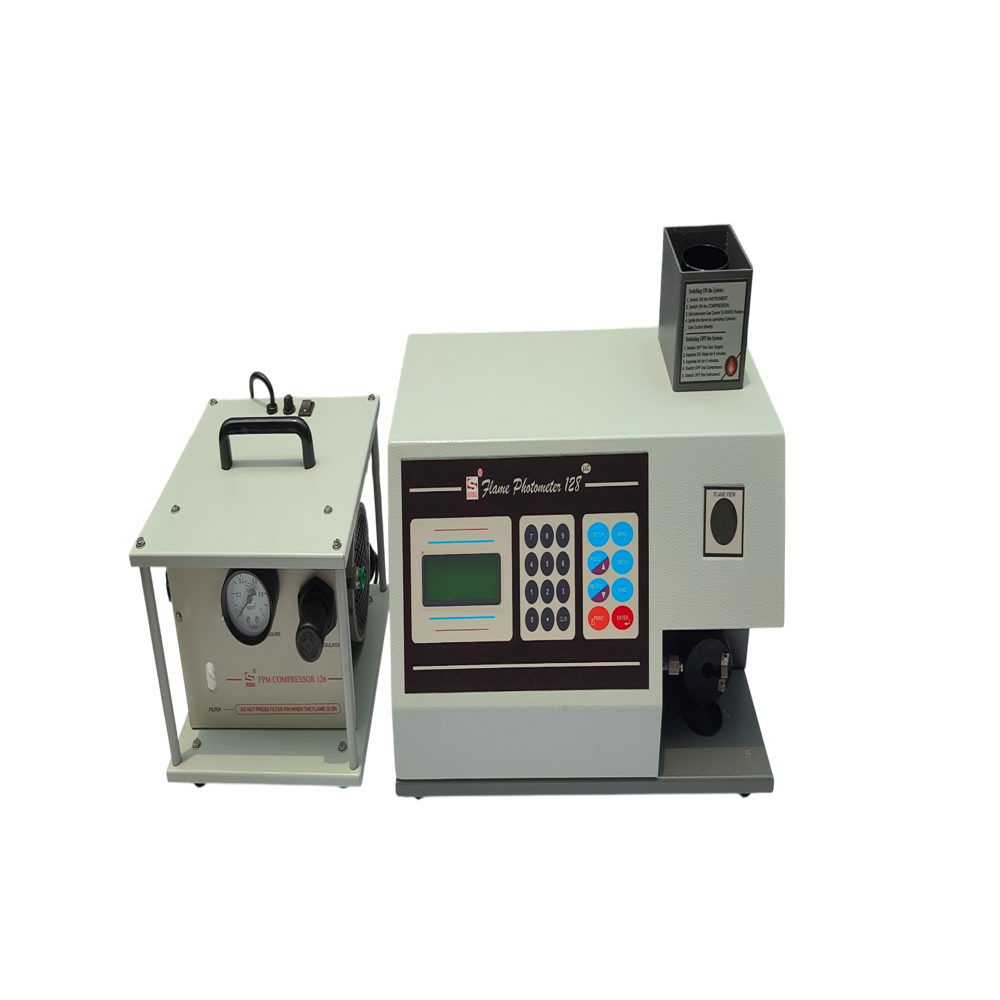
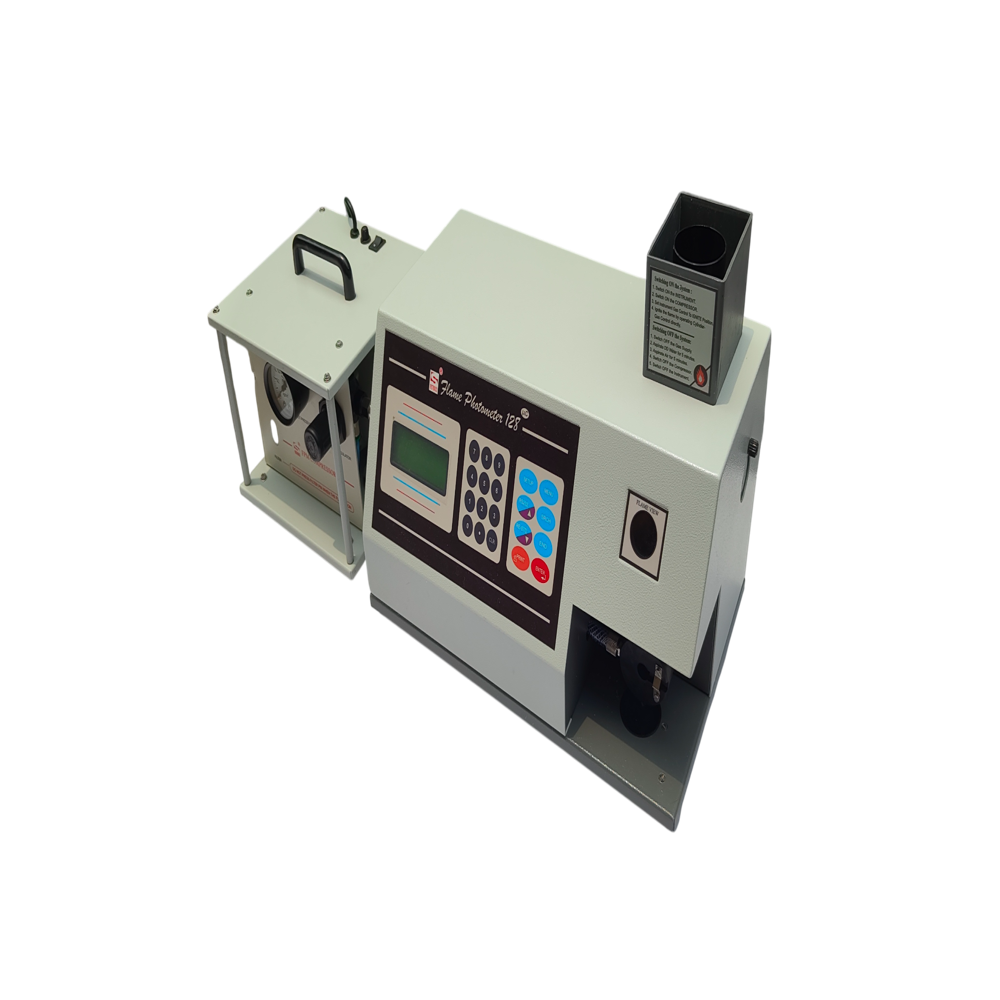
Flame Photometer 128
85500.0 INR/Unit
Product Details:
- Display Type Digital LED Display
- Power Supply 230V 10%, 50Hz
- Features Simultaneous display for two elements, auto calibration, filter selection
- Glass Type Borosilicate Glass (Burner and Nebulizer)
- Temperature Resistance Ambient to 50C
- Control Type Digital Controls
- Accuracy 2% (FS)
- Click to View more
X
Flame Photometer 128 Price And Quantity
- 1 Unit
- 85500.0 INR/Unit
Flame Photometer 128 Product Specifications
- 230V 10%, 50Hz
- Simultaneous display for two elements, auto calibration, filter selection
- Digital Flame Photometer, Digital Flame Photometer
- 230V AC, 50 Hz
- Stainless Steel, ABS Plastic
- Digital LED Display
- Laboratory Flame Photometer
- Rectangular
- Determination of Sodium, Potassium, Lithium & Calcium in solution
- 365 x 220 x 190 mm
- 2% (FS)
- 230 V
- Metal and Plastic
- Borosilicate Glass (Burner and Nebulizer)
- Digital Controls
- Ambient to 50C
- Na & K: 0-100 ppm, Ca: 0-100 ppm, Li: 0-100 ppm
- Direct Ranges for Na, K, Ca, Li
- Automatic with Internal Gas Control
- Na: 0.2 ppm, K: 0.2 ppm, Ca: 1 ppm, Li: 0.1 ppm
- 2-6 ml/min
- Built-in, Oil Free
- 100 ml Each for Na, K, Ca, Li
- 5-10 psi
- Provided, Front Panel Controls
- Air Filter, Set of Four Filters, Dust Cover, Operation Manual
- Stainless Steel, Corrosion Resistant
- LPG or Propane
- Approx. 7 kg
Product Description
The advantages of the Controller Based Flame Photometer 128 at a glance:
- Microcontroller controlled automation for ease of operation.
- Determination upto four elements with single aspiration (Na, K, Li, and Ca).
- Upto five point calibration available.
- Frequently used measurement setups can be stored and recalled.
- Facility for restandardisation with single standard available.
- Data processing with linear mode or quadratic curve fitting
- Results of a measurement taken earlier can be recalled and displayed (Max. results storage: 700)
- 20-character, 4-line alphanumeric LCD readout for adequate user interfaces.
- Built-in real time clock for date and time of analysis.
- Centronix printer port for Epson compatible Dot Matrix / Inkjet printers to get hard copy of results (printer optional).
- Printout facility for individual sample, batch samples in the memory (700 max).
- Air compressor with built-in air regulator and air filter (SYSTRONICS Model 126).
Advanced Measurement Precision
Featuring high sensitivity and accuracy (2% FS), the Flame Photometer 128 ensures reliable quantification of sodium, potassium, lithium, and calcium in various solutions. Its simultaneous dual-element display, automatic calibration, and digital controls streamline the measurement process, making it a preferred choice for laboratories demanding precision.
Robust and User-friendly Design
The instrument is constructed with stainless steel and ABS plastic, ensuring durability and resistance to corrosion. Its front-panel controls and digital LED display facilitate straightforward operation. The included accessories-like air and dust filters, a set of four element filters, and a comprehensive manual-make setup and daily use seamless for all laboratory staff.
Versatile Applications and Benefits
Used for clinical, research, and industrial applications, the Flame Photometer 128 offers rapid and accurate measurement of essential minerals in solution. The built-in, oil-free compressor, combined with LPG or propane flame sources, enhances user safety and convenience. Its robust construction and automatic ignition system ensure consistent performance under diverse ambient conditions.
FAQ's of Flame Photometer 128:
Q: How does the Flame Photometer 128 operate for element detection?
A: The Flame Photometer 128 utilizes a flame-based process where your liquid sample is aspirated into a flame, inducing emission of characteristic wavelengths for sodium, potassium, lithium, and calcium. The device's integrated digital controls and automatic gas ignition ensure straightforward, repeatable operation.Q: What types of samples can be analyzed with the Flame Photometer 128?
A: This photometer is ideal for analyzing aqueous solutions containing sodium, potassium, lithium, or calcium. Its application spans clinical, pharmaceutical, environmental, agricultural, and food laboratories requiring precise elemental analysis.Q: When should I perform calibration, and is it included in the instrument?
A: Calibration should be performed before each measurement session to maintain accuracy. The Flame Photometer 128 offers automated calibration with standard solutions (100 ml each of Na, K, Ca, Li) included in the accessories, simplifying the setup process.Q: Where should the Flame Photometer 128 be installed for optimal use?
A: Install the unit on a stable laboratory bench in a well-ventilated area, away from direct heat sources. Ensure the gas supply (LPG or propane) is within the specified 5-10 psi pressure range to achieve safe and consistent flame conditions.Q: What is the process for sample aspiration and measurement?
A: The liquid sample is aspirated at a rate of 2-6 ml/min into the stainless steel nebulizer, atomized, and directed into the flame. Emitted light is filtered and detected, with results displayed digitally for direct readout for each element.Q: How do the built-in controls and display benefit daily use?
A: Front-panel zero and slope adjustments, filter selection, and an intuitive digital LED display enable rapid switching between measured parameters. This facilitates real-time monitoring and quick results with minimal training required.Q: What regular maintenance does the Flame Photometer 128 require?
A: Routine maintenance includes cleaning the burner and nebulizer (borosilicate glass and stainless steel components), verifying air and dust filters, and ensuring proper gas connections. Regularly consult the operation manual for detailed guidance.Tell us about your requirement

Price:
Quantity
Select Unit
- 50
- 100
- 200
- 250
- 500
- 1000+
Additional detail
Mobile number
Email

Other Products in 'Lab Equipment' category

Enviro Instruments
Greater Noida, Uttar Pradesh, India
Contact Details

- Plot No. A-04, Sigma-4, Gautam Budh Nagar, Greater Noida - 201310, Uttar Pradesh, India
- Phone :07313727186

- Mr Ashish Kumar Verma (CEO)
- Mobile :07313727186

 Send Inquiry
 Send SMS
ENVIRO INSTRUMENTS
All Rights Reserved.(Terms of Use)
Developed and Managed by Infocom Network Private Limited.
Developed and Managed by Infocom Network Private Limited.

