



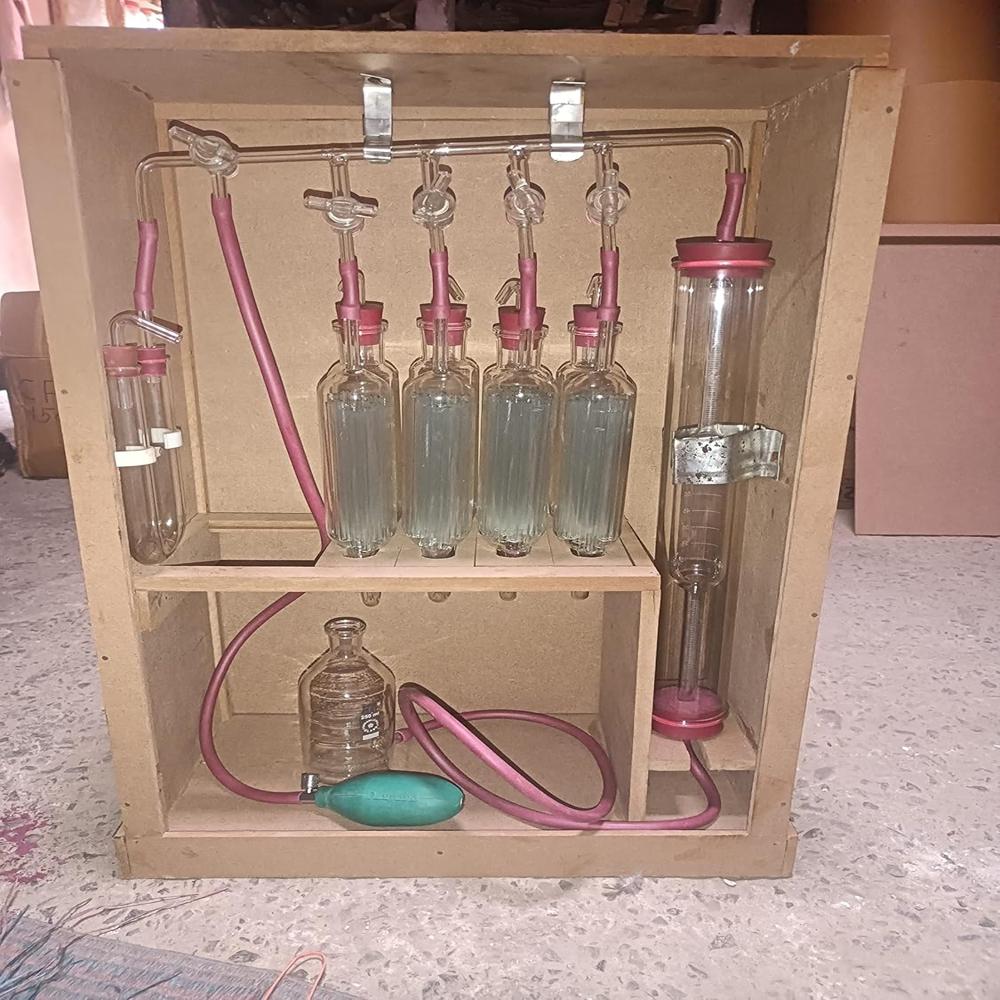
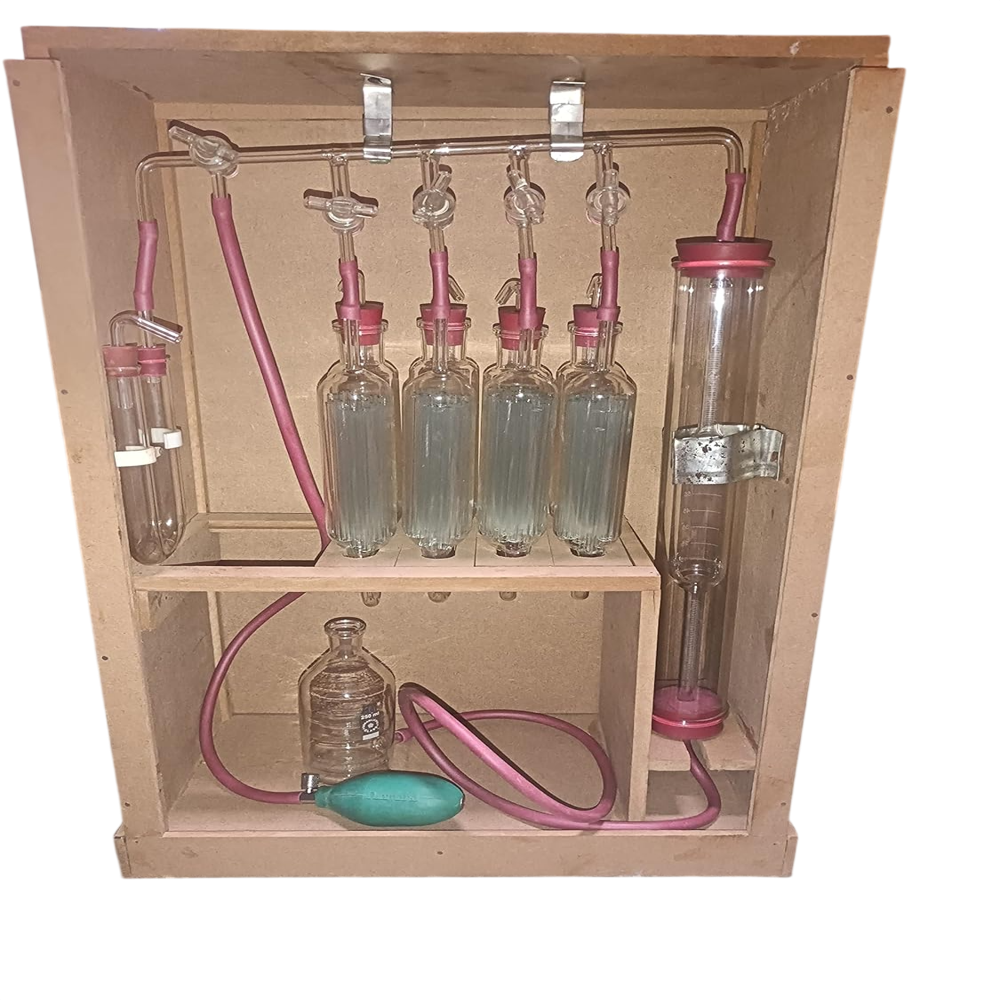
Orsat Gas Analysis Apparatus/ Orsat Apparatus
13500.0 INR/Unit
Product Details:
- Shape Rectangular Frame with Cylindrical Burette
- Display Type Graduated Glass Burette
- Temperature Resistance Up to 150C
- Accuracy 0.2%
- Glass Type Borosilicate Glass
- Control Type Manual
- Features Portable, Reusable Absorption Pipettes, Easy to Clean
- Click to View more
X
Orsat Gas Analysis Apparatus/ Orsat Apparatus Price And Quantity
- 13500.0 INR/Unit
- 1 Unit
Orsat Gas Analysis Apparatus/ Orsat Apparatus Product Specifications
- Orsat Gas Analysis Apparatus, Manual Gas Analysis Apparatus
- 0.2%
- 100 mL (burette volume)
- Borosilicate Glass
- Portable, Reusable Absorption Pipettes, Easy to Clean
- Manual
- Hard Glass, High-Grade Rubber, Metal Stand
- Gas Analysis Apparatus
- Borosilicate Glass, Rubber, Metal
- Graduated Glass Burette
- Manual Operation (No electricity required)
- Rectangular Frame with Cylindrical Burette
- Analysis of Flue Gases, Laboratory Gas Analysis
- 450 mm x 150 mm x 600 mm (approx)
- Up to 150C
- Manual with Aspirator Bottle
- 100 ml per operation
- Approx. 6 kg
- Rubber Tubing, Absorbing Solutions, Aspirating Bottle, Measuring Burette
- Polished Wooden Finish
- Easy to maintain and clean
- 0.2% Reading
- 3 (configurable for O2, CO2, CO etc.)
- Wall Mounted or Table Top
- Lab and Field Use
- IS: 6360
- High Grade Rubber and Glass Connectors
Product Description
Key Features & Components:
High Precision Gas Analysis for Laboratories and Field Work
Engineered for accuracy, the Orsat Gas Analysis Apparatus delivers 0.2% precision for gas volume measurements. Adaptable with three absorption pipettes, it allows flexible gas selection, making it suitable for a variety of analytical needs. Its portable, compact design and sturdy materials withstand field and laboratory environments alike, supporting dependable, repeatable results wherever gas analysis is required.
User-Friendly Manual Operation
The apparatus operates easily via manual control with an aspirator bottle, eliminating the need for electricity. All essential accessories, including a measuring burette, rubber tubing, absorbing solutions, and durable connectors, come included. The design is optimized for ergonomic use, whether wall-mounted or tabletop, and maintenance is straightforward thanks to the easy-to-clean components and reusable pipettes.
FAQ's of Orsat Gas Analysis Apparatus/ Orsat Apparatus:
Q: How does the Orsat Gas Analysis Apparatus work for analyzing gases?
A: The apparatus measures specific gases (such as O2, CO2, and CO) by passing a gas sample through absorption pipettes containing selective reagents. As each gas is absorbed, the change in gas volume is read on the graduated burette with 0.2% accuracy, providing reliable quantitative analysis.Q: What gases can be analyzed using the three configurable absorption pipettes?
A: By using different absorbing solutions, the three pipettes can be configured to measure concentrations of oxygen (O2), carbon dioxide (CO2), carbon monoxide (CO), and other gases, making the apparatus suitable for various flue and laboratory gas analyses.Q: When and where is this apparatus most effectively used?
A: The Orsat apparatus is effective in both laboratory and field environments, wherever accurate gas analysis is required, such as in combustion studies, boiler tests, or atmospheric research. Its compact, portable build is especially valuable in locations without electrical access.Q: What is the process for conducting a gas analysis with this apparatus?
A: A 100 mL gas sample is drawn into the burette. The sample is then sequentially passed through the pipettes, each containing a specific reagent to absorb one type of gas. The reduction in gas volume after each absorption step is measured, determining the gas concentrations.Q: How easy is it to maintain and clean the Orsat apparatus?
A: Cleaning and maintenance are straightforward due to the apparatus's simple manual operation, reusable pipettes, and high-quality borosilicate glass construction. Regular rinsing after use and periodic replacement of absorbing solutions help ensure longevity and accuracy.Q: What benefits does manual operation provide compared to automated systems?
A: Manual operation allows the Orsat apparatus to be used without electricity, increasing portability and reliability in remote or outdoor locations. It also offers full visibility and control over the measurement process, making it ideal for educational and research purposes.Tell us about your requirement

Price:
Quantity
Select Unit
- 50
- 100
- 200
- 250
- 500
- 1000+
Additional detail
Mobile number
Email

Other Products in 'Lab Equipment' category

Enviro Instruments
Greater Noida, Uttar Pradesh, India
Contact Details

- Plot No. A-04, Sigma-4, Gautam Budh Nagar, Greater Noida - 201310, Uttar Pradesh, India
- Phone :07313727186

- Mr Ashish Kumar Verma (CEO)
- Mobile :07313727186

 Send Inquiry
 Send SMS
ENVIRO INSTRUMENTS
All Rights Reserved.(Terms of Use)
Developed and Managed by Infocom Network Private Limited.
Developed and Managed by Infocom Network Private Limited.

