



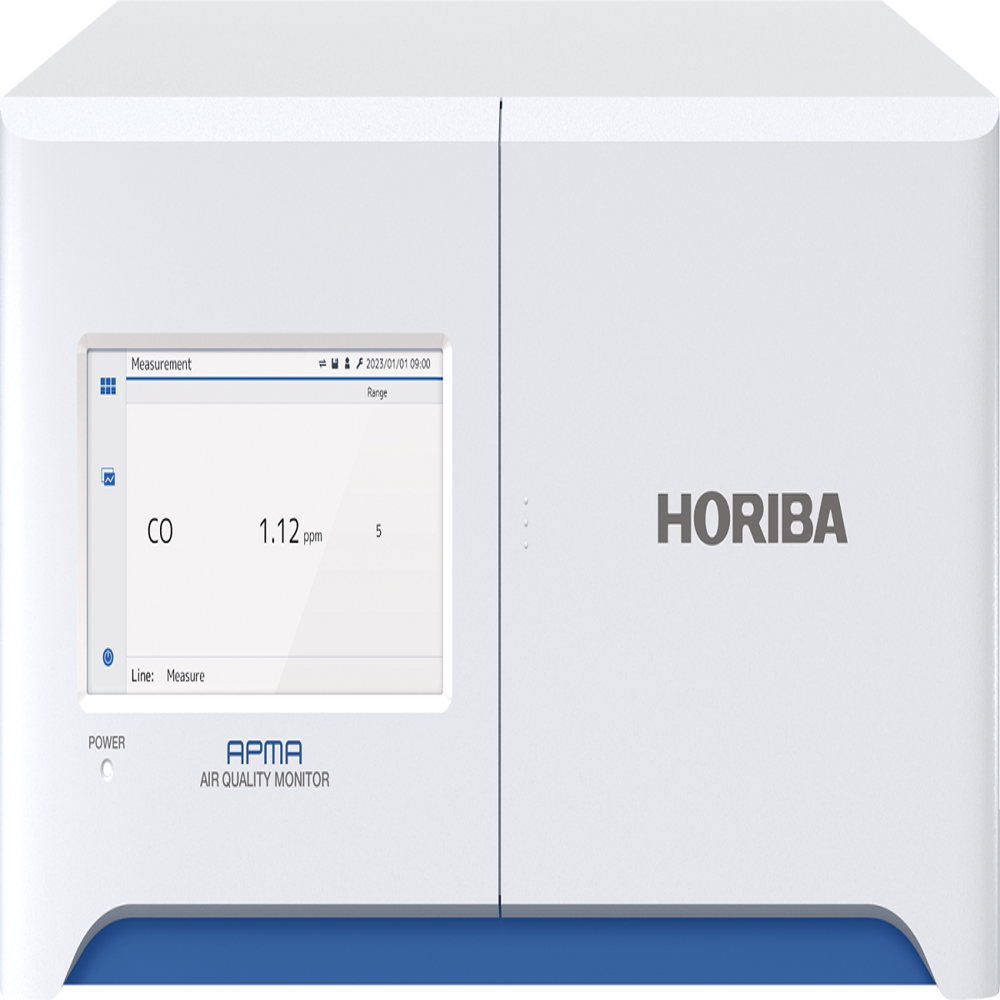
APMA-380 NDIR Carbon Monoxide Monitor/CO Analyzer
750000.0 INR/Unit
Product Details:
- Temperature Resistance 0C - 40C (operating)
- Accuracy 2% of reading or 1 ppm (whichever is greater)
- Shape Rectangular
- Display Type Large LCD digital display
- Control Type Automatic with microprocessor
- Features Non-dispersive infrared (NDIR) sensor; Data storage; Alarm outputs; Real-time measurement; User calibration options
- Power Supply 90-264 VAC, 47-63 Hz
- Click to View more
X
APMA-380 NDIR Carbon Monoxide Monitor/CO Analyzer Price And Quantity
- 1 Unit
- 750000.0 INR/Unit
APMA-380 NDIR Carbon Monoxide Monitor/CO Analyzer Product Specifications
- Stainless Steel (Housing)
- Rectangular
- 220 Volt (v)
- 430 (W) x 568 (D) x 221 (H) mm, Approx. 16 kg Millimeter (mm)
- NDIR Carbon Monoxide Monitor/CO Analyzer
- 0C - 40C (operating)
- Stainless Steel & Electronic Components
- 2% of reading or 1 ppm (whichever is greater)
- 90-264 VAC, 47-63 Hz
- 90-264 VAC
- Large LCD digital display
- Automatic with microprocessor
- Continuous measurement and analysis of CO concentration in ambient air or exhaust gases
- Carbon Monoxide Monitor / Analyzer
- Non-dispersive infrared (NDIR) sensor; Data storage; Alarm outputs; Real-time measurement; User calibration options
- Non-dispersive Infrared (NDIR)
- APMA-380
- Approx. 30 minutes
- 1% of full scale
- 0-500 ppm (standard), up to 5,000 ppm (optional)
- Analog (4-20 mA), Digital (RS-232/RS-485)
- 0.5 - 1 L/min
- Yes, with built-in storage
- 0 - 90% RH, non-condensing
- 2 independent relays for high/low CO concentration
- 1 ppm
APMA-380 NDIR Carbon Monoxide Monitor/CO Analyzer Trade Information
- 45 Days
Product Description
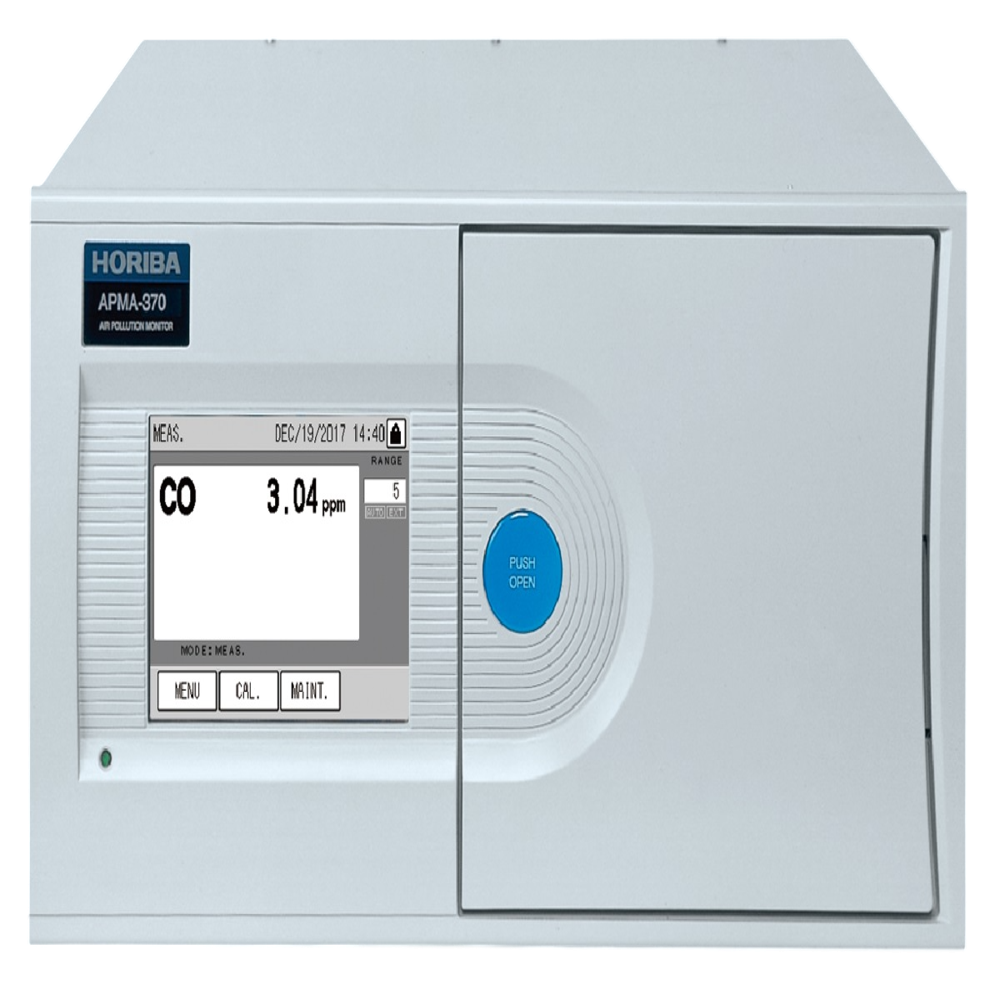
The APMA-380 is an analyzer for measuring carbon monoxide in ambient air and other background gases, for air quality control as well as for variety of industrial applications. HORIBA's state-of-the-art NDIR technology enables high sensitivity and stable real-time continuous measurement.Features:
- Cross-modulation NDIR technology provides excellent sensitivity, stability and robustness
- Continuous online measurement with fast response
- Wide measurement range with up to 6 ranges selectable, minimum 0-5 ppm and maximum 0-300 ppm
- Compensation detector adopted for elimination of interference by coexisting gases
- Enhanced Lower Detection Limit
Specifications:
| Component | Carbon monoxide (CO) |
|---|---|
| Measuring principle | Cross-Modulation Non-Dispersive Infrared Absorption (NDIR) |
| Measurement range | 0-5/10/20/50/100/300 ppm (up to 6 ranges selectable, auto-range) |
| Lower Detection Limit (2) | < 0.02 ppm*1 |
| Measurement unit | ppb, g/m3, ppm, mg/m3 |
| Sample gas flow rate | Approx. 1.5 L/min |
| Repeatability | 1.0% of full scale |
| Linearity | 1.0% of full scale |
| Zero drift | < 0.02 ppm (24 h) |
| Span drift | < 0.5% of full scale (24 h) |
| Response time (T95) | < 30 s from the inlet*1 |
| Display | 7-inch color LCD with touch panel |
| Communication | Ethernet 2 (ModbusTM TCP), RS-232C 1 (ModbusTM RTU) , USB flash drive 1 |
| Analog output (option) | Maximum : 3 channels (insulated) DC 4-20 mA, DC 0-0.1 V, DC 0-1 V, DC 0-5 V or DC 0-10 V |
| Digital output (option) | Relay contact output for range 3 channels, relay contact output for other 6 channels |
| Digital input (option) | Maximum : 4 channels, non-isolated input |
| Installation environment | Operation temperature : 0-40C (32F - 104F), relative humidity : 85% or less |
| Temperature and pressure compensation | With |
| Sampling pump and filter | Internal |
| Power supply | AC 100-240 V10% (Max. voltage: AC 250 V), 50/60 Hz, consumption 90 W |
| Dimensions, weight | 430 (W) x 568 (D) x 221 (H) mm, Approx. 16 kg |
| Compliance | CE, UKCA, KC, FCC, China RoHS |
Advanced NDIR Sensing Technology
The APMA-380 leverages non-dispersive infrared (NDIR) sensing to deliver precise, interference-free detection of carbon monoxide. This technique ensures high selectivity and stability, essential for both safety and compliance in monitoring applications across diverse environments.
Versatile Monitoring and Data Management
Equipped with analog and digital output interfaces (4-20 mA, RS-232/RS-485), dual relay alarm outputs, and built-in data storage, the APMA-380 integrates smoothly into existing monitoring systems and supports robust data management for in-depth analysis.
User-Focused Operation and Durability
The device features a large LCD digital display, user calibration options, and automatic microprocessor-based controls for effortless operation. Its sturdy stainless steel housing enhances longevity, while specifications such as 90-264 VAC compatibility support flexible installation.
FAQ's of APMA-380 NDIR Carbon Monoxide Monitor/CO Analyzer:
Q: How does the APMA-380 Carbon Monoxide Monitor detect CO levels?
A: The APMA-380 uses non-dispersive infrared (NDIR) technology to detect carbon monoxide. This method measures the absorption of infrared light by CO molecules, offering high accuracy and stable, real-time readings.Q: What is the measuring range and accuracy of the APMA-380 analyzer?
A: The standard measuring range is 0-500 ppm, with an optional extension up to 5,000 ppm. Accuracy is maintained at 2% of reading or 1 ppm, whichever is greater, ensuring reliable monitoring in various settings.Q: When should the APMA-380 be used for CO monitoring?
A: This analyzer is designed for continuous measurement and analysis of CO concentrations in ambient air or exhaust gases, making it suitable for industrial environments, laboratories, and emissions monitoring.Q: Where can the APMA-380 be installed for optimal performance?
A: Install the APMA-380 in locations requiring real-time CO monitoring, such as manufacturing plants, research facilities, or exhaust outlets. It operates within 0C to 40C and up to 90% relative humidity (non-condensing).Q: What is the process for data logging and retrieval with this analyzer?
A: The APMA-380 features built-in data storage that records measurement data continuously. Data can be accessed via the digital outputs (RS-232/RS-485) or through the analog interface, facilitating seamless data management and analysis.Q: How do the alarm outputs function on the APMA-380?
A: The device includes two independent relay outputs for high and low CO concentration thresholds. These relays can be configured to trigger alarms or control external systems when preset CO levels are detected.Q: What are the benefits of using this CO analyzer in industrial settings?
A: Benefits include high detection sensitivity (1 ppm), robust stainless steel construction, user calibration capability, real-time monitoring, extensive data logging, and seamless integration into process control and safety systems.Tell us about your requirement

Price:
Quantity
Select Unit
- 50
- 100
- 200
- 250
- 500
- 1000+
Additional detail
Mobile number
Email

Other Products in 'Lab Equipment' category

Enviro Instruments
Greater Noida, Uttar Pradesh, India
Contact Details

- Plot No. A-04, Sigma-4, Gautam Budh Nagar, Greater Noida - 201310, Uttar Pradesh, India
- Phone :07313727186

- Mr Ashish Kumar Verma (CEO)
- Mobile :07313727186

 Send Inquiry
 Send SMS
ENVIRO INSTRUMENTS
All Rights Reserved.(Terms of Use)
Developed and Managed by Infocom Network Private Limited.
Developed and Managed by Infocom Network Private Limited.

