



Measuring Cylinder, Jar, Volumetric Flask, Beaker, Glass Pipette, Dispenser, Burette Calibration
2500.0 INR/Unit
Product Details:
- Mounting Type Laboratory bench-top / Stand mountable
- Resolution 0.01 ml / 0.1 ml depending on instrument
- Interface Type Not applicable / RS232 (for advanced models)
- Humidity Up to 85% RH non-condensing
- Max Height Up to 500 mm (as per type/capacity)
- Application Calibration of volumetric laboratory glassware
- Hardness Borosilicate glass as per ISO/IS standard
- Click to View more
X
Measuring Cylinder, Jar, Volumetric Flask, Beaker, Glass Pipette, Dispenser, Burette Calibration Price And Quantity
- 1 Unit
- 2500.0 INR/Unit
Measuring Cylinder, Jar, Volumetric Flask, Beaker, Glass Pipette, Dispenser, Burette Calibration Product Specifications
- Analytical laboratory, Quality control, Research
- 10 ml, 25 ml, 50 ml, 100 ml, 250 ml, 500 ml, 1000 ml, 2000 ml etc.
- 220V AC, 50Hz
- Immediate / as per manual operation
- 220V AC, 50Hz (for digital type)
- 1 ml to 2000 ml depending on instrument
- Manual operation / as per calibration protocol
- Manual and Digital options available
- 50/60 Hz (for electronic types)
- Single (per calibration run)
- Manual / Semi-automatic
- Standard laboratory sizes
- 10C to 40C operating range
- Graduated markings / Digital (where applicable)
- Measuring Cylinder, Jar, Volumetric Flask, Beaker, Glass Pipette, Dispenser, Burette
- Clear graduation, chemical resistance, autoclavable
- Borosilicate glass as per ISO/IS standard
- 0.1% to 0.5% of reading
- As per instrument class (Class A/B, ISO/IS standard)
- Dependent on instrument capacity
- Up to full scale of instrument
- Approx. 2-5 kg (varies as per instrument)
- Up to 500 mm (as per type/capacity)
- Up to 85% RH non-condensing
- 0.01 ml / 0.1 ml depending on instrument
- Not applicable / RS232 (for advanced models)
- Laboratory bench-top / Stand mountable
- Calibration of volumetric laboratory glassware
- Meniscus alignment
- Silk screened, amber/white ceramic, fade proof
- Borosilicate glass/Autoclavable Polypropylene (for select models)
- Transparent
- Class A: 0.1 ml/100 ml; Class B: 0.2 ml/100 ml
- Special volumes or labeling on request
- Detergent and distilled water rinse recommended
- Individual protective boxes
Product Description
NABL Calibration of Measuring Cylinder / Jar, Volumetric Flask, Beaker, Glass Pipette, Dispenser, Burette, Range: 0.1 ml to 1 ml/ Measuring Cylinder / Jar, Volumetric Flask, Beaker, Glass Pipette, Dispenser, Burette, Range: 1 ml to 100 ml/ Measuring Cylinder / Jar, Volumetric Flask, Beaker, Glass Pipette, Dispenser, Burette, Range: 100 ml to 500 ml/ Measuring Cylinder / Jar, Volumetric Flask, Beaker, Glass Pipette, Dispenser, Burette, Range: 2 l to 5 l/ Measuring Cylinder / Jar, Volumetric Flask, Beaker, Glass Pipette, Dispenser, Burette, Range: 5 l to 8 l/ Measuring Cylinder / Jar, Volumetric Flask, Beaker, Glass Pipette, Dispenser, Burette, Range: 500 ml to 2000 mlPrecision Accuracy for Laboratory Excellence
Manufactured to Class A and Class B tolerances as per ISO/IS standards, our volumetric instruments deliver superior accuracy (0.1-0.5%) for critical laboratory tasks. Their clear graduation markings and meniscus reading method ensure confident measurement, essential for reliable analytical results in quality control, research, and routine analysis.
Robust, Chemically Resistant Materials
Constructed from borosilicate glass or autoclavable polypropylene, these measuring tools withstand corrosive chemicals and demanding temperature cycles (10C-40C). The materials ensure long-term durability, minimal contamination risk, and compatibility with high-temperature sterilization processes-suitable for rigorous laboratory environments.
Comprehensive Range and Customization Options
A wide selection of instrument types and volume capacities meets diverse laboratory needs. From 10 ml pipettes to robust 2000 ml cylinders, as well as semi-automatic digital models, our instruments offer both flexibility and scalability. Custom volume and labeling requests are easily accommodated to suit unique operational requirements.
FAQ's of Measuring Cylinder, Jar, Volumetric Flask, Beaker, Glass Pipette, Dispenser, Burette Calibration:
Q: How do I properly read the volume on these measuring instruments?
A: For all glassware and polymer models, use the meniscus alignment method: observe the liquid's lowest point at eye level, aligning it precisely with the graduation marking for the most accurate reading. This is essential to maintain Class A or B accuracy.Q: What is the recommended cleaning procedure for calibration and repeated use?
A: It is recommended to wash all instruments with laboratory-grade detergent, followed by thorough rinsing with distilled water. This minimizes residue and ensures measurement integrity during each calibration run.Q: When should I choose borosilicate glass versus autoclavable polypropylene?
A: Select borosilicate glass for chemical resistance, thermal stability, and optimal performance with most reagents. Opt for autoclavable polypropylene if frequent high-temperature sterilization is required or for certain chemical compatibility needs in select instrument models.Q: Where can these measuring instruments be used most effectively?
A: They are ideally suited for analytical laboratories, quality control labs, and research facilities requiring accurate volumetric calibration. The range of capacities and instrument types supports diverse scientific and industrial applications.Q: What customization options are available for these volumetric instruments?
A: We offer customization in terms of special volume capacities or specific labeling to align with your laboratory's unique documentation or experimental requirements. Please contact us with your customization needs.Q: How does calibration accuracy differ between Class A and Class B instruments?
A: Class A instruments offer tighter tolerances (0.1 ml/100 ml), suitable for high-precision work. Class B provides 0.2 ml/100 ml and is often chosen for routine measurements or where slightly higher error margins are acceptable.Q: What benefits do silk-screened, fade-proof graduations provide?
A: Silk-screened amber or white ceramic graduations are highly resistant to chemical and physical wear, ensuring measurement legibility and long-term accuracy throughout the life of the instrument.Tell us about your requirement

Price:
Quantity
Select Unit
- 50
- 100
- 200
- 250
- 500
- 1000+
Additional detail
Mobile number
Email

Other Products in 'Mechanical' category
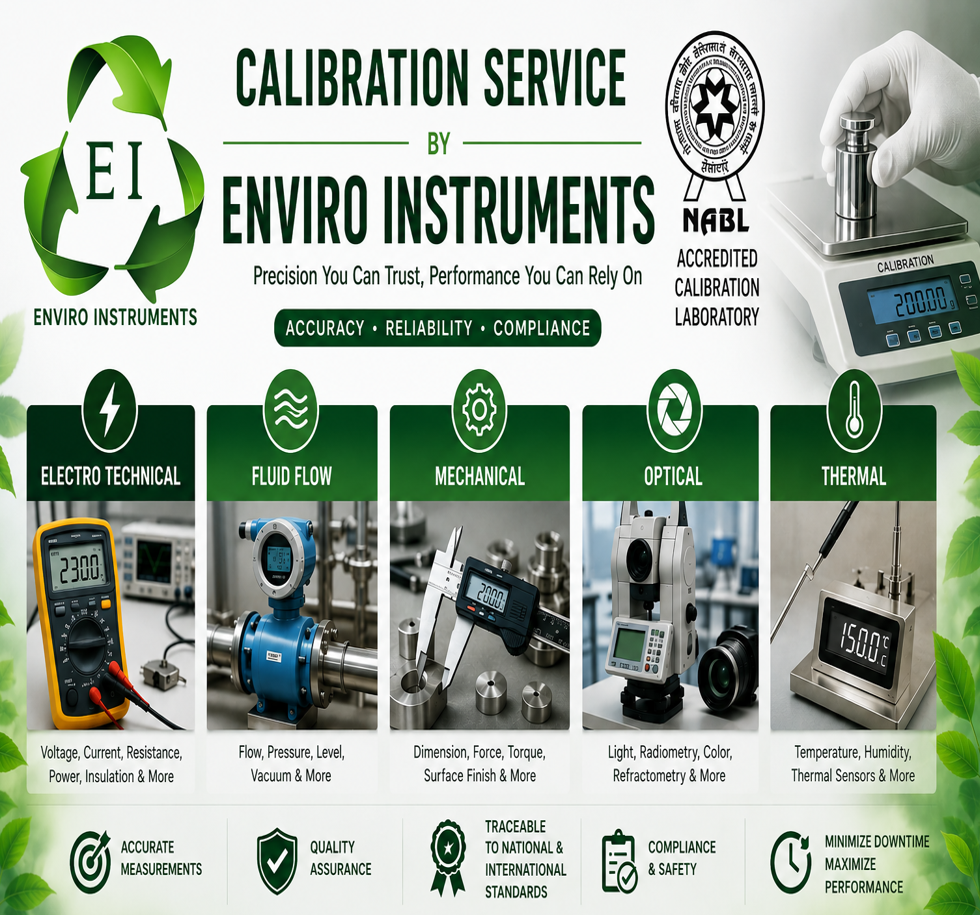

Enviro Instruments
Greater Noida, Uttar Pradesh, India
Contact Details

- Plot No. A-04, Sigma-4, Gautam Budh Nagar, Greater Noida - 201310, Uttar Pradesh, India
- Phone :07313727186

- Mr Ashish Kumar Verma (CEO)
- Mobile :07313727186

 Send Inquiry
 Send SMS
ENVIRO INSTRUMENTS
All Rights Reserved.(Terms of Use)
Developed and Managed by Infocom Network Private Limited.
Developed and Managed by Infocom Network Private Limited.

